
Lifestyle
Thailand’s Wai Phra
This post is also available in: English
This blog has been provided by Asia Backpackers BLOG for Inspire.
What do you do if you want to make an offering to Buddha in Thailand – The Wai Phra Offering. The does and don’ts in this ancient ceremony.
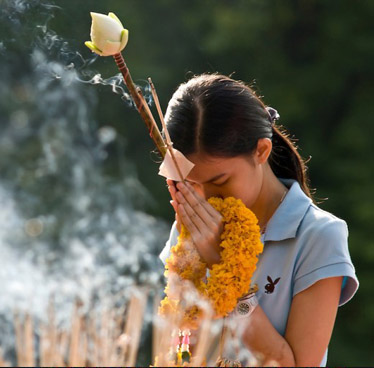
If you have been to any of the thousands of temples, (40,717 as of 31/12/2004), that are dotted everywhere in the Kingdom, you may well have seen Buddhist devotees making offerings, called wai phra; wai being the traditional greeting with palms pressed together and raised towards the face and phra being the word for a Buddha image, monk or priest.
There are no hard and fast rules, to state you have to be Buddhist to make a wai phra offering, nor are there, any ardent rules on how a wai phra is conducted – as far as I know.
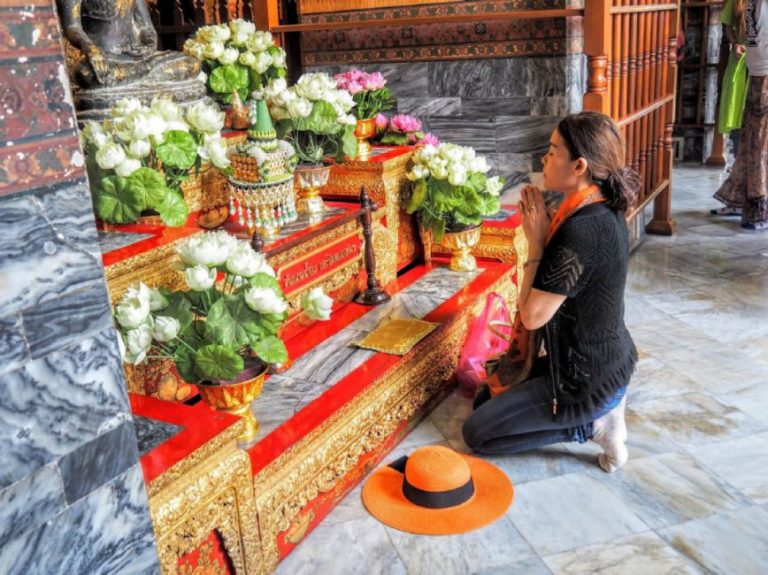
For what I have seen here in Thailand, all are welcome in the Buddhist faith, if a non Buddhist person wishes to pay their respects, most attending Buddhists will be quite happy to see you join in a wai phra, so long as it is conducted with respect. (Also see our post on Respect in Thai Temples)

Thailand’s Wai Phra Offering
The usual if not wholly traditional offering, consists of flowers (often a lotus), a candle or oil lamp, three incense sticks, food, fruit, water or drinks and possibly a small square of gold leaf, which will be added to a Buddha image (Buddha images are also Known as Rupa). All these items can be purchased at most temple grounds.
Conducting the next stages, of actually offering these symbolic gifts, (offerings are actually made to the Triple Gem), is again down to the individual person, but goes something on the lines of the following:
Firstly the single lit candle is placed with the all the others, in front of a Buddha image. The flowers are then placed either in a bowl of water or added to the existing array near or on the Buddha image.
Food and drink, (used mainly when making offerings to ‘Spirit Houses’), may also be added at this time before the incense sticks are lit using the candle.
The three incense sticks are clasped between the palms of both hands and raised to the level of the chest. This gesture expresses deep reverence to the Triple Gem – Buddha, Dharma and Sangha.

Spirit Houses
The Feet and Buddha
Sitting with feet tucked behind (so ones feet, face away from the Buddha image), the person making the offering will recite, normally in silence, a favorite set of phrases from the Buddhist scriptures. This recital will be made usually in Pali, the sacred language of Theravada Buddhism.
Buddhanet.net, writes ‘that listening to these Pali recitals (of the dhamma or the doctrine of the Buddha) can avert illness or danger, ward off the influence of malignant beings, obtain protection and deliverance from evil, and can promote health, prosperity, welfare and well-being.
The three still burning, incense sticks are then planted into an already provided container of sand. It is this time, if the worshipers have brought gold leaf, that this is pressed onto the Buddha image.

The end of the proceeding, a triple prostration is performed with the individual bowing to the Buddha image three times whilst still kneeling and placing palms down on the floor at the end of each bow.
More ways to gain Merit
Prior to leaving the wat, a donation of money or other alms for the monks may also be given. This is to help towards the daily needs of the monks and the upkeep of the temple. This may take the form of Money Trees, where the cash would have been collected prior to the formalities, these actions like the Wai Phra, will also earn merit for the person making the donation.
For more on the deeper meaning to the individual offerings listed above click here

One point of warning, Roy Cavanagh wrote in his post on the same matter: An important thing to note is that you should resist the temptation to take a good sniff at any flowers that you buy for the purpose of a Buddhist offering. The flowers are being presented to Buddha and are not for your benefit. According to Thai Buddhist belief, bad things can happen to your nose in a future life, so don’t say that you weren’t warned!
This blog was written for inspire by http://asia-backpackers.com/thailands-wai-phra/